CHICAGO — For industrial laundries and textile service companies, risk management has traditionally meant responding to problems after they occur — investigating collisions, managing insurance claims, repairing damaged equipment, addressing unsafe behaviors, and absorbing the ongoing costs of fuel, maintenance, and vehicle wear.
Technology is changing that equation.
Cameras, sensors, AI, and telematics are giving laundry operators greater visibility into what is happening on the road and inside their operations. More importantly, these tools can provide information that allows companies to identify problems earlier, coach employees, improve processes and prevent incidents before they become costly.
But technology alone is not the answer.
The experience of large-scale operations such as nationwide uniform provider UniFirst, along with the perspective of Rodrigo Patron, director of operations for Lace House Linen in Petaluma, California, points to the same conclusion.
The real value of technology comes from what people do with the information it provides.
MOVING FROM REACTIVE TO PROACTIVE
At UniFirst, fleet safety is a significant undertaking. The company operates from more than 270 locations, with drivers visiting more than 300,000 business sites every day.
With millions of miles traveled annually, the company has implemented an advanced telematics and dashcam program across its fleet, using technology to shift safety management from primarily analyzing incidents after the fact to proactively addressing driver behaviors.
The approach combines AI-driven sensors, cameras, GPS tracking, electronic driver vehicle inspection reports and automated maintenance alerts.
In service delivery vehicles, sensors can provide immediate audio alerts when behaviors such as failing to wear a seat belt, following too closely or driving while distracted are detected. The goal is not simply to document the behavior, but to allow the driver to correct it immediately.
The results from UniFirst’s initial pilot program were significant.
The company reported a 91% reduction in overall safety events, including a 98% drop in unbuckled-seat-belt events, a 91% reduction in distracted-driving behaviors and an 83% reduction in total collision risk.
As the technology was expanded to approximately 40% of the fleet by mid-2025, the company continued to see evidence that safer habits were becoming established. Coachable in-cab alerts dropped by 95%.
For UniFirst Senior Vice President Matt Croatti, the results demonstrate the potential of proactive technology.
“In the industrial laundry sector, fleet safety is the backbone of our service,” he says. “By putting AI technology and sensors directly in our service delivery vehicles, we’ve shifted from managing the aftermath of collisions to helping prevent them.
“Seeing an 83% plunge in collision risk is a leading indicator that proactive technology changes the risk equation for our drivers.”
SAFETY AND EFFICIENCY GO TOGETHER
The cost of risk extends beyond collisions and employee safety. Fleet technology can also identify operational inefficiencies that quietly add to the cost of running a laundry business.
At UniFirst, GPS tracking, electronic pre-trip reports and automated maintenance alerts help supervisors monitor vehicles, identify potential mechanical problems and keep trucks operating reliably.
Another target is unnecessary engine idling. By using sensor data to monitor and reduce excessive idle time, UniFirst achieved a 61% reduction in long idling, translating into savings of more than 2,000 gallons of fuel every week.
Croatti says that illustrates an important point for laundry operators: A technology investment designed primarily around safety can also produce measurable operational savings.
“When you look at a 61% reduction in idle time translating to over 2,000 gallons of fuel saved weekly, it’s clear that safety technology and operational efficiency go hand in hand,” he points out. “Lowering your on-road risk inherently lowers your operating costs.”
Cameras can provide another form of financial protection. In the event of a disputed accident or fraudulent claim, footage can provide objective evidence of what actually occurred, potentially protecting a company and its driver from an unjustified claim.
THE HUMAN FACTOR
For all the benefits technology can provide, however, there is a potential trap: believing the technology itself will solve the problem.
That is where Patron’s experience at Lace House Linen provides an important perspective.
“We can fall into a kind of ‘magical thinking,’” he points out. “We believe purchasing the latest and greatest technology will solve our problems.”
Instead, he argues, companies must recognize that someone must review the alerts, investigate what happened, communicate with employees, and follow through.
Technology can identify a hard-braking event, for example, but the alert does not necessarily tell the entire story. A driver may have been following too closely, or the driver may have braked appropriately to avoid another vehicle.
Reviewing the footage and talking with the driver allows management to distinguish between those situations.
The same principle applies inside the laundry.
A sensor or camera may identify an unusual event, but management still must determine whether the appropriate response is maintenance, employee training, a process change, or some other corrective action.
An alert should trigger an investigation — not automatically be treated as proof of misconduct.
MAKING ACCOUNTABILITY PART OF THE INVESTMENT
For Patron, the decision to purchase technology should include a plan for managing the information it generates.
“Employees should understand what technology is being introduced, what it monitors and what the company expects from them,” he says. “They also should understand that the information may be used for recognition, coaching, corrective action or, when warranted, disciplinary action.”
Just as important, someone needs to be specifically responsible for reviewing the information.
“This cannot be something a busy manager handles only when there is a free moment,” says Patron. There needs to be dedicated time, appropriate coverage during absences, and a process for investigating events and confirming that concerns have been addressed.
Without that structure, even sophisticated technology can become little more than an expensive source of data.
FROM ALERTS TO BEHAVIOR CHANGE
The most meaningful measure of a technology program is not how many alerts it produces. It is what happens after the alert.
Are unsafe behaviors becoming less frequent? Are employees receiving useful coaching? Are maintenance problems being identified before they cause downtime? Are fuel costs falling? Are collisions declining? Are employees demonstrating safer habits without constant intervention?
At UniFirst, the reduction in coachable alerts provides one indication of behavior change. The company pairs its telematics information with regular supervisor reviews, defensive-driving training and one-on-one coaching.
“We pair our telematics data with weekly supervisor reviews and mandatory annual defensive driving,” Croatti says. “Technology gives us the visibility, but the one-on-one human coaching is what actually builds lasting safe habits.”
That combination is critical.
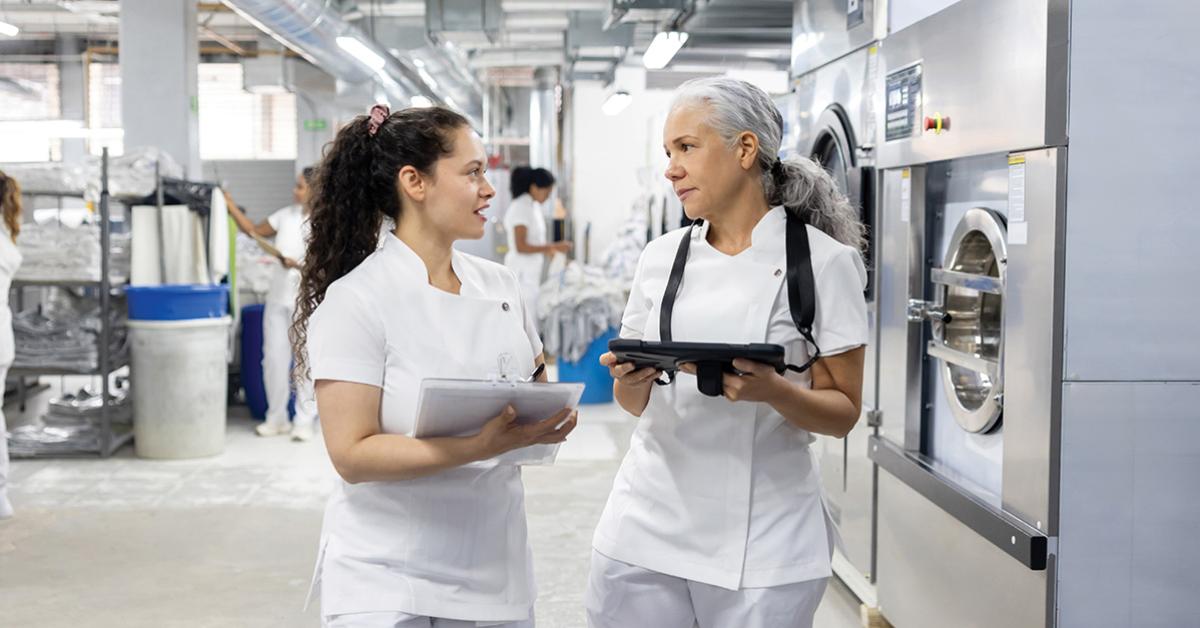
Technology provides the visibility that may not have existed before. Managers can no longer rely solely on what they happen to see during a route or what an employee remembers after an incident. They can use objective information to identify patterns and have more productive conversations.
But those conversations still have to happen.
BUILDING A CULTURE AROUND THE DATA
Successful technology programs also require employee buy-in.
Drivers and plant employees are more likely to embrace monitoring technology when they understand its purpose and see that it is being applied consistently, shares Patron.
That means recognizing good performance as well as addressing problems.
If employees believe cameras and sensors exist only to catch them doing something wrong, the technology can become a source of resistance. If employees understand that the information gained is being used to improve safety, provide coaching, and protect both employee and company, it can become a valuable part of the workplace culture.
The distinction is important.
The goal should not be to create a perfect record with zero alerts, according to Patron. Real-world operations are too complex for that. The goal is to identify meaningful risks, understand their causes and reduce their recurrence.
A COST-OF-RISK MINDSET
For laundry operators, the opportunity is to think about technology as more than another equipment purchase. It is a tool for lowering the overall cost of risk.
Fewer collisions can mean lower repair costs, reduced downtime, fewer insurance claims and less disruption to customer service. Less idling can mean lower fuel consumption. Better maintenance information can help prevent breakdowns. Dashcam footage can help resolve disputed claims. Real-time driver feedback can help establish safer habits.
And data collected across the operation can help management identify trends that might otherwise remain hidden.
But no benefits happen automatically.
As Patron points out, the investment must include the people responsible for reviewing the information and acting on it.
Without that human element, even the most sophisticated technology can eventually become another unused investment.
The warning is particularly relevant as AI and connected technologies become increasingly common throughout the laundry industry. More data does not necessarily mean better management. The value comes from turning information into decisions, decisions into action, and action into lasting changes in behavior.
For UniFirst, the combination of technology, training, and supervisor coaching has produced measurable improvements in safety and efficiency. For operators such as Patron, the lesson is equally straightforward: Buy the technology, but don’t forget to invest in the people who will use it.
After all, the technology can identify a problem, but someone still has to do something about it.
Have a question or comment? E-mail our editor Matt Poe at [email protected].